Five Categories, Only One of Them Stops Debris
Every gutter guard on the market falls into one of five categories, and the category — not the brand, not the finish, not the marketing spend — determines whether the homeowner calls you back in two years. Knowing the categories is the single most valuable thing you can carry into a sales call, because it lets you explain the difference without criticizing whoever installed the last system.
Screens sit flat over the gutter on a hinge or clip. They keep out leaves and nothing else. Pine needles, shingle grit, seed pods and roof sand pass straight through the openings and settle into the channel, where they hold moisture against the gutter floor.
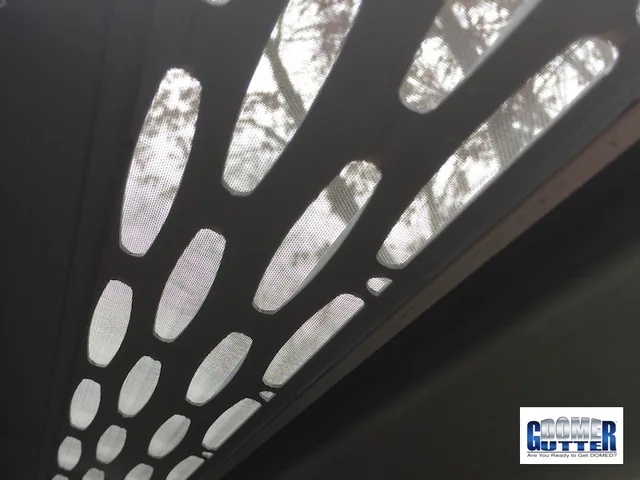
Micro-mesh is the category most homeowners have already priced. It works — until it doesn't. The mesh is a filter, and filters load up. Fine debris packs the surface, water sheets over the edge instead of through it, and the whole assembly has to be pulled, cleaned and refitted.
Reverse-curve (surface-tension) guards use a rounded nose to let water follow surface tension around the lip while debris slides off the front. The design is sound. The failure mode is a narrow water channel that the debris that slides off has to clear, and on a roof with heavy pine loading the nose itself becomes the collection point.
Foam and brush inserts sit inside the gutter and rely on water passing through a porous material. They work for a season or two and then hold grit and moisture permanently. They are the cheapest thing on a shelf and the most expensive thing to own.
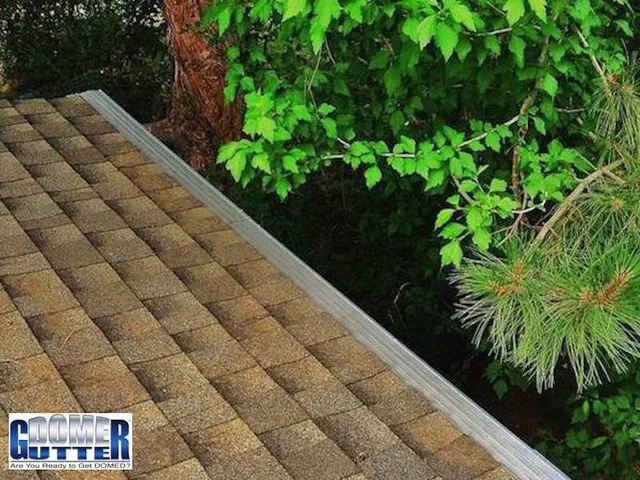
Extruded aluminum with a high-threshold profile is the fifth category, and the only one that isn't a filter. Water drops through a wide opening that debris physically cannot follow. Nothing accumulates on a surface that debris never lands on. There is no mesh to pack, no foam to sour, and no channel small enough to choke.
Why the Failure Pattern Matters More Than the Spec Sheet
Ask any seasoned installer what brings a homeowner back to the phone, and they will not say "a product that stopped working." They will say "a product that stopped working quietly." A guard that fails visibly gets replaced. A guard that half-works — water sheeting over the nose, a slow drip at the fascia, damp debris against the gutter floor — takes two or three seasons to notice, and by then the damage is behind the siding.
The tell is where the water goes. A clogged or undersized gutter is a mosquito nursery: the EPA's mosquito control guidance is blunt that eliminating standing water is the most effective thing a property owner can do, and a gutter holding an inch of water after every storm is exactly that standing water. In a cold market the same trapped water refreezes along the eave and starts building toward an ice dam. Both problems trace back to the same root cause, and both of them end up as a phone call — to whoever installed the system.
That is the commercial argument for selling a system that fails rarely rather than one that fails slowly. A callback costs you a truck roll, a crew day and the referral that homeowner would have made. A premium install costs the homeowner more once and costs you nothing after.
Business Model: Franchise vs. Independent Dealer
The second thing a prospective Dealer needs to understand is that two very different business models are paying for those products. One charges an upfront buy-in, takes a royalty off every job, and sets the territory, the brand and the sales process. The other is a manufacturer-Dealer partnership.
The independent Dealer Program model works like this: no franchise fee, no royalty, no percentage of your revenue. The manufacturer builds the product, backs it with a 30-year limited material warranty, and supplies corporate leads. You sell it and install it, and you keep the full margin on the job. The trade-off is simple — nobody hands you a playbook and nobody takes a cut of your work. What you build, you own.
If you are weighing the two, put the numbers side by side on paper before you sign anything. A royalty sounds small until it is multiplied across every job for the length of an agreement.
What to Actually Say on a Sales Call
Dealers who win consistently do not open with a competitor's name and they do not open with a price. They open with a question about the roof — how many trees, which side of the house gets the prevailing weather, whether the homeowner has ever had water at the foundation — and then they classify the problem out loud.
- "This is a filter problem." Debris is being caught rather than shed, so it loads up and holds water. That is a maintenance contract pretending to be a permanent solution.
- "This is a channel problem." The gutter itself is undersized for the roof area feeding it, so even a clean gutter overflows in a hard rain.
- "This is a drainage problem." Gutters are fine; the water is landing somewhere it cannot escape.
Once the homeowner agrees on which one they have, the product recommendation stops being a brand argument and becomes a diagnosis. That is a much harder conversation to lose, and it is the version of the sale that produces referrals instead of warranty claims.
The Three Decisions That Define Your Business
Product category, business model and warranty length are the three choices that determine what your business looks like in five years. Choose a filter and you are competing on price forever, against whoever is hungriest that month. Choose a franchise and you are renting a brand instead of building one. Choose a short warranty and you are hoping the homeowner never reads the documents you left behind.
Or choose solid extruded aluminum, independent ownership, and a warranty long enough that it outlives the conversation. Then go find the territories that are still open before someone else does.